Who We Are
We have gathered on this hillside since the early 1950s. In that time we have built two buildings, installed an organ worth traveling for, and planted a garden that is open to anyone who needs it. What has not changed is who is welcome: everyone.
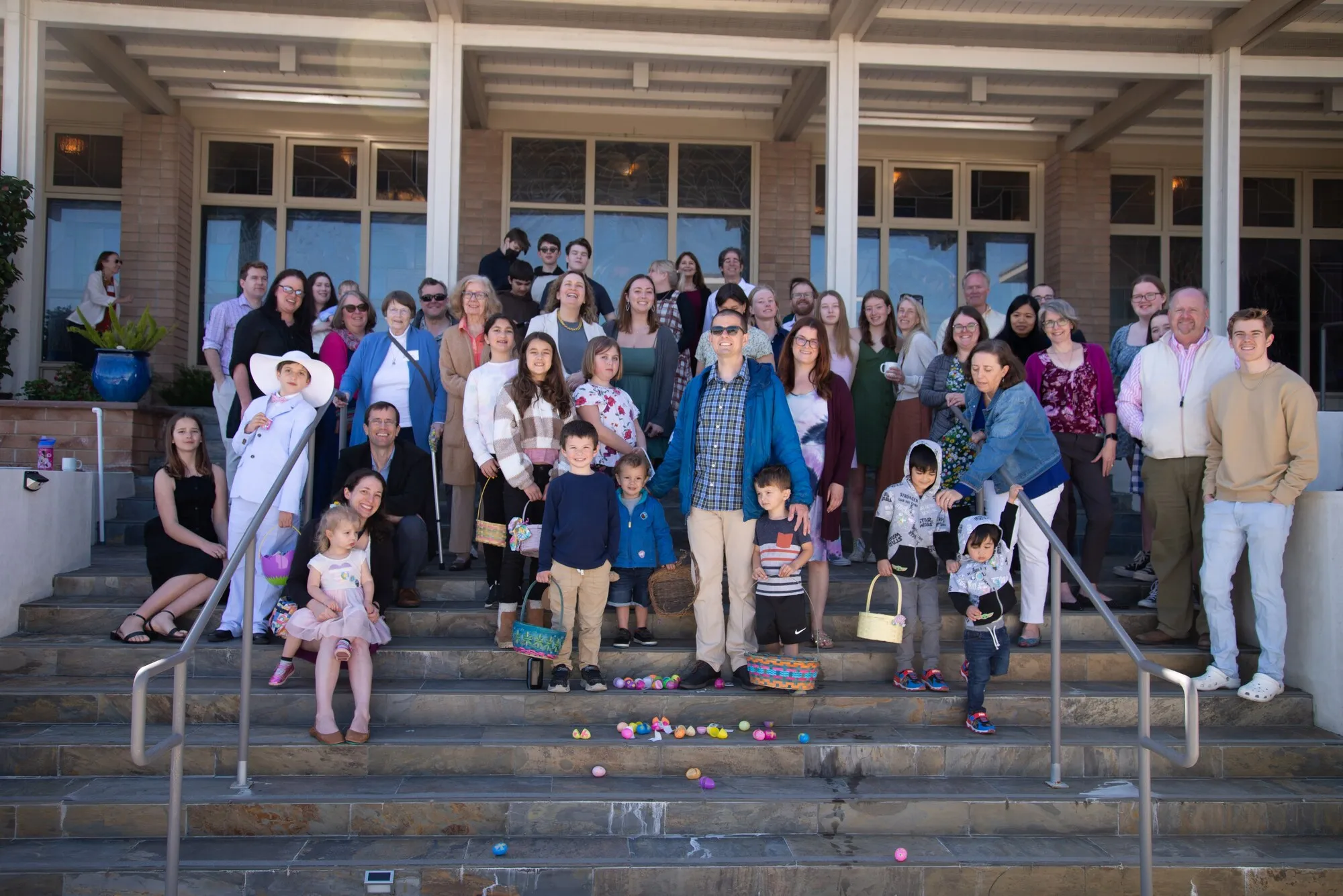
Our story
1950
A mission on the hillside
Transfiguration began as a mission supported by San Mateo’s historic Episcopal Church of St. Matthew. Early meetings gathered in homes and at the County Fair Grounds before a site was found near the southern edge of the city. That hillside setting, above new and growing development, is what gave us our name.
Early 1950s
The first building
Ground was broken for the first of two buildings, and construction took two years. That building is what is now our renovated Parish Hall.
1956
Parish status
Transfiguration was granted parish status, and planning began for a permanent church building.
1961
Into the sanctuary
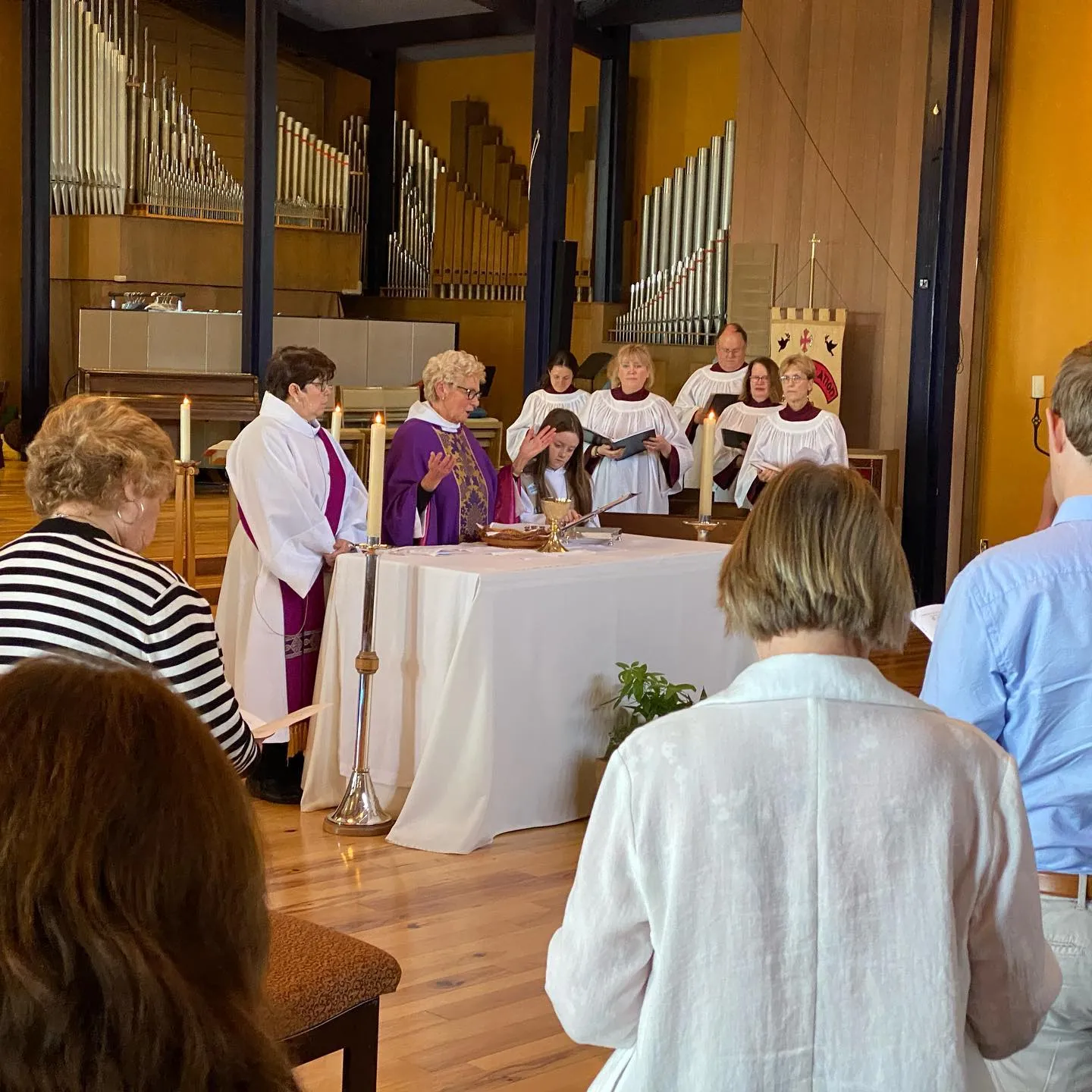
On Palm Sunday, worship moved into the sanctuary we still use. Bishop Pike’s crozier marks are identifiable on the doors to this day, where he knocked and demanded entrance at the consecration.
1960s
A garden and a nursery school
The Memorial Garden was planned, created and blessed. Nursery school outreach began, serving families across San Mateo — the beginning of what became our Early Learning Center.
1978
The Reuter organ
Music at Transfiguration has always been highly regarded, and the installation of the Reuter pipe organ — first played on Easter Sunday — sealed it. The building has been a favored venue for recitals, dance, choral and orchestral concerts ever since.
1992
The Memorial Garden opens for interment
The city granted permission to inter the ashes of loved ones in the Memorial Garden, and it has served the parish and its neighbors that way since.
2000
Sheltering families
Transfiguration took a leading role in creating the San Mateo County Interfaith Hospitality Network, alongside churches in surrounding communities, housing and feeding families without homes in our own Parish Hall.
Early 2000s
Joyful Noise
The parish created its Family “Joyful Noise” service, which keeps every part of the Eucharistic liturgy in an informal format built for families with young children. It went on to grow a middle-school “Community of Wonder” and a high-school “Faith Lab”, where every question was expected, received and explored.
2010
A flood, and a better room
The sanctuary roof failed and the resulting flood was ruinous. The repairs produced something better: an open, flexible worship space with nothing bolted to the floor. We move the altar, the seats and the aisles as worship — or a concert — requires.
2022
A renovation
A capital campaign completed a full renovation of the parish hall, preschool and offices, and relandscaped the ground between the sanctuary and the hall. Accessibility improved substantially: a lift between the parish hall floors, a graded step-free path up to the sanctuary, flat parking spaces, and a second bathroom with a shower.
The Memorial Garden
Just above the sanctuary is our Memorial Garden, where the ashes of loved ones have been interred since 1992. It is a place for outdoor worship, for contemplation and for prayer, and we are affiliated with the worldwide Quiet Garden movement, which now numbers more than four hundred members.
The garden is open to all — not only to parishioners. If you would like to visit, or to ask about interment, email the parish office.
Staff and leadership
Staff
- Jennifer HornbeckRector
- Jennifer Hornbeck has served as a priest in the Episcopal Diocese of California for 20 years, in a variety of positions on the Peninsula, the North Bay, and San Francisco. She enjoys community conversations, preaching, strategic planning, and outreach. In her free time she enjoys hiking, yoga, and photography.
- Jim DahlstromDirector of Music
- Jim Dahlstrom has been a church musician since high school, and has served as a director of music and as a classroom music teacher in both the Diocese of Stockton and the Archdiocese of San Francisco.
Vestry and leadership
The vestry is the parish’s elected lay leadership. Each member’s class is the year their term ends.
Lay officers
- Senior WardenTim Fox
- Junior WardenHeather Jolly
- Clerk to the VestryTing Ting Wu
- TreasurerChris Villanis
Deanery delegates
Our representatives to the Diocesan Convention and the Peninsula Deanery.
- Keith Jobe
- Skip Howie
- Jennifer Robinson
Vestry class of 2027
- Aidan Jobe Sea
- Heather Jolly
- Ting Ting Wu
Vestry class of 2028
- Tim Fox
- Priscilla Gillmore
- Mike Robinson
Vestry class of 2029
- Margie Shields
- One seat open
A question for the vestry? Email us and we’ll pass it on.